
In my early years of teaching, I spent countless hours before and after school, differentiating lessons to meet every student’s needs. While differentiation improved engagement, it left me exhausted and questioning if teaching should consume so much time. Then, I discovered Universal Design for Learning (UDL)—a framework that shifted my perspective on differentiation and inclusion.
UDL helped me understand that true inclusion goes beyond differentiation. It’s about designing learning experiences that remove barriers, allowing all students to thrive without draining a teacher’s time. Here’s why I fell in love with UDL and how it can help you.
What is Universal Design for Learning (UDL)?
Universal Design for Learning (UDL), was developed by CAST. It is a set of guidelines that help educators eliminate learning barriers. These guidelines work by designing flexible goals and environments. UDL promotes high expectations for all learners while recognizing their variability. By offering multiple means of engagement, representation, and action and expression, UDL ensures that every student can succeed.
Why I Love Universal Design for Learning
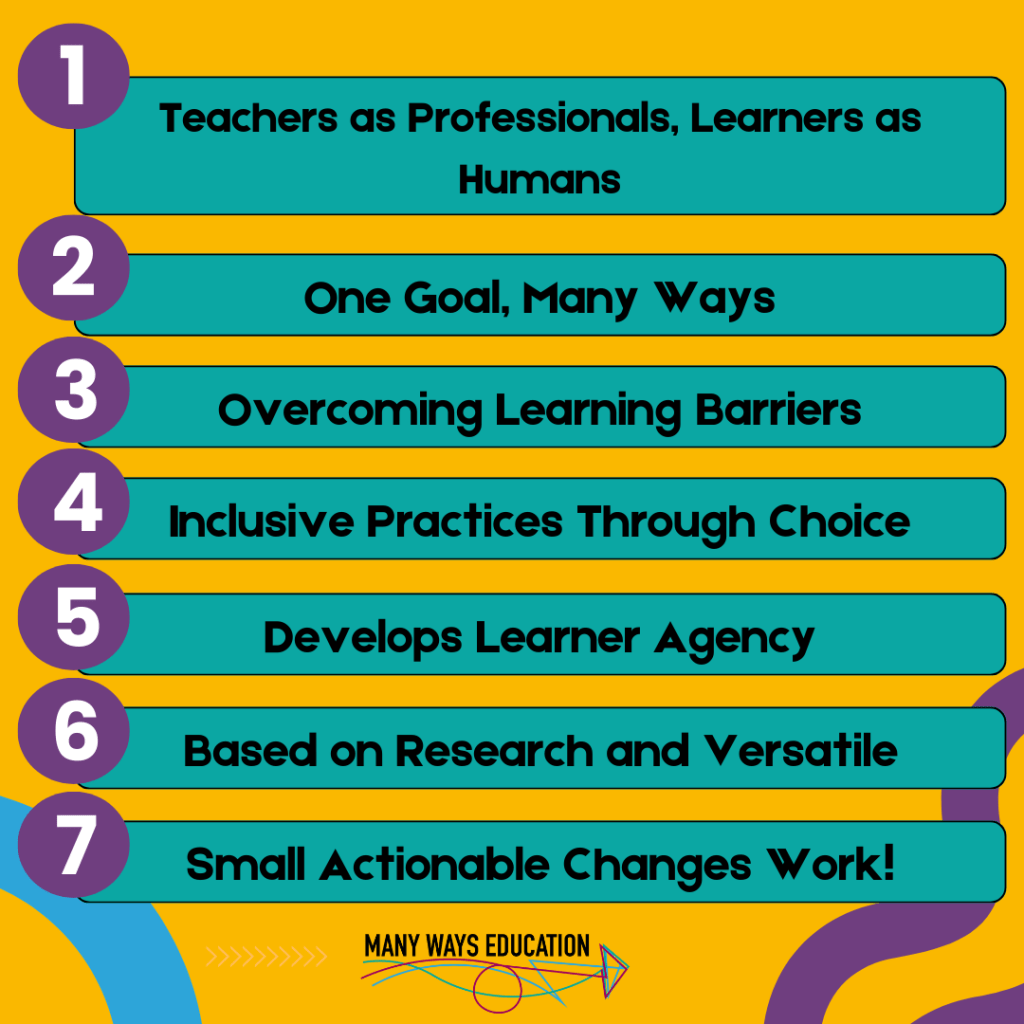
1. Teachers as Professionals, Learners as Human
The UDL Guidelines are flexible—they allow you, as a professional, to make informed decisions while considering each learner’s unique needs. The Guidelines do not dictate how a lesson should be taught. They leave that to you as the professional. However, they give you considerations to ensure that all learners can engage in the learning. You don’t have to differentiate every element of a lesson. Just a small tweak, like offering multiple means of engagement, can have a big impact on student success.
Practical strategy for a more inclusive classroom:
After planning a lesson, choose one consideration from the UDL framework that addresses a key need of your students. Then, make a small tweak based on that consideration to make your lesson more inclusive and accessible for all learners.
2. One Goal, Many Ways
UDL encourages flexible goals, which means no more designing two or three mini-lessons in one. The focus shifts to inclusive goals, allowing students to achieve the same outcome in different ways. This saves you planning time while keeping expectations high.
Practical strategy for a more inclusive classroom:
When crafting goals, ask: “Am I unintentionally creating barriers? How can I reframe this goal to offer more choices?”
3. Overcoming Learning Barriers
We all face learning barriers. UDL reminds us that barriers lie in the learning environment, not in the student. Through thoughtful design, you can create inclusive learning experiences that remove those barriers, making learning accessible for all students.
These barriers could include difficulties like being unable to read the math problem on a test, struggling to sit still and focus for more than 15 minutes, or not understanding the relevance of the material being taught. Each of these challenges affects a student’s ability to engage with the lesson and demonstrate their learning effectively.
Practical strategy idea for a more inclusive classroom:
Reflect on a lesson that went poorly. Identify a barrier that affected your students and redesign that element by removing the barrier.
4. Inclusive Practices Through Choice
UDL’s emphasis on choice supports student variability by offering pathways to engage in learning that are meaningful to each learner. When we provide choice, we use an inclusive teaching strategy. Well-designed choices cater for every student’s interest, ability, or personal goals. Students are more likely to engage when they see a choice that relates to or is achievable for them.
Practical strategy for a more inclusive classroom:
Start small. Give students two choices when demonstrating their understanding.
Example: In maths, when students are required to explain their thinking. Give them the choice to write their thoughts down or tell a friend.
5. Develops Learner Agency
Have you ever thought, “I wish that student would engage more,” or “Maybe she’s just not interested”? Often, we forget to ask students about their learning preferences. By offering choices and using tailored strategies, we foster their ownership and motivation, boosting engagement and making teaching more rewarding. Empowering students benefits both them and us as educators.
Practical strategy for a more inclusive classroom:
Ask your learners how they learn best – talking it through or working by themselves? Then try to incorporate options that cater for your students’ preferences when you can.
6. Based on Research and Versatile
UDL is grounded in neuroscience and educational research. The framework evolves with societal expectations, ensuring that it remains relevant for today’s classrooms. It’s versatile, too—you can apply UDL to any subject, practice, or procedure.
7. Small Actionable Changes Work!
You don’t need to do it all at once for UDL to be effective. The guidelines are not a checklist; they encourage small, manageable changes that make a big impact over time. Even one adjustment can significantly enhance student learning.
Practical strategy for a more inclusive classroom:
Take a routine in your classroom and review it through a UDL lens. Identify one thing you’re already doing and tweak it to better support your students’ diverse needs. Small shifts can lead to lasting improvements.
Conclusion
Inclusion doesn’t have to be overwhelming. UDL helps you make small, sustainable changes that lead to big results for your students—and for your own well-being. With UDL, you can regain time, reduce stress, and foster a more inclusive classroom without sacrificing your teaching passion. Start today by making just one shift, and see how UDL transforms your practice and your classroom.
For more resources on UDL, visit CAST, explore our other posts to discover practical strategies for applying UDL in your classroom or subscribe below for more quick and practical tips!
 Many Ways Education
Leave a comment