
In this post, you will find:
- Why leveraging learner strengths are important for success
- 4 practical strategies to identify and leverage learner strengths
- Resources to support your own journey
Traditional education supports our learners who have strengths in language, self-regulation and executive functions but what happens when the learners in front of us don’t have those strengths?
Usually we find frustration from learners and educators alike. What if we just acknowledged that none of the learners in front of us are “average learners” and come to us with rich and varied experiences, skills, knowledge and strengths? Suddenly we are not fighting against how we think the world should be.
Leveraging our learners’ strengths can not only help us as educators to create lessons that are successful and engaging, but it also helps improve self-esteem for our learners. When we start to acknowledge our learners for the amazing humans they are and not how we think they should be, we start to design lessons that benefit all our learners.
I know I am not telling you anything new. We all know we should be doing it but how can we leverage learner strengths in a practical way?
The great thing is that UDL in its very nature allows us to leverage our learner strengths. Here’s how we can identify and leverage learner strengths.
Behaviour Communicates
We all have had those learners that can be challenging to engage. Why are they challenging? Have their strengths been identified for them or their teacher? Behaviour is a big communicator of learner strengths, however we usually don’t see it as a strength because traditional education needs their strength to be to self-regulate, write and spell at a certain level, or sit and listen.
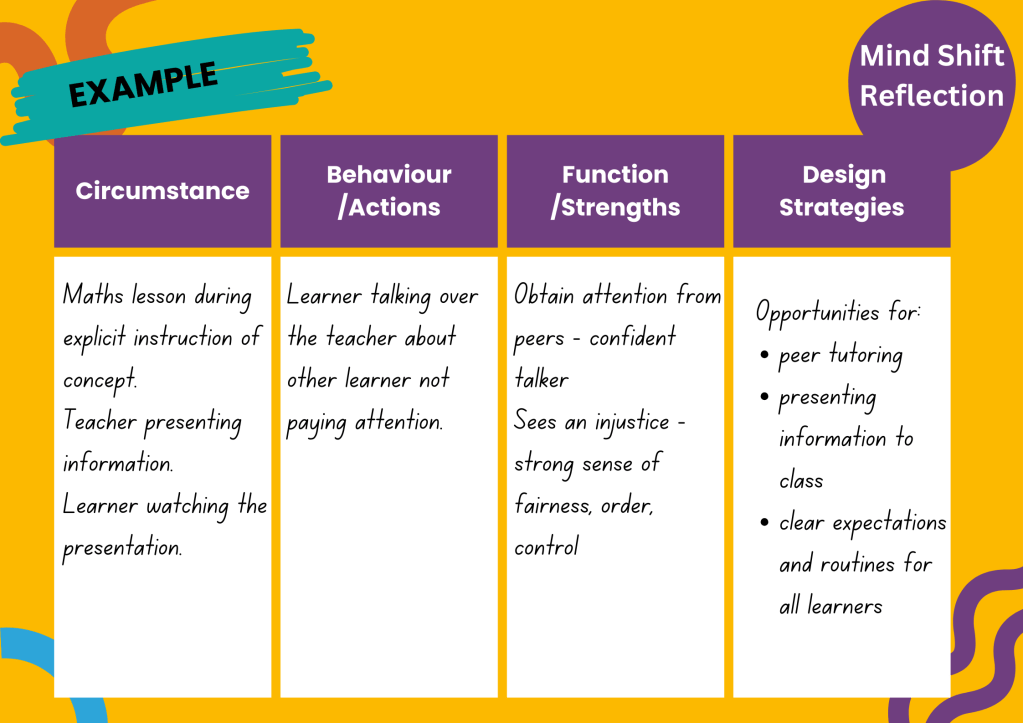
For example, a learner who continually calls out the answer or talks while you are talking. A strength for them is talking and confidence. These strengths could be leveraged by providing options where learners have an opportunity to talk and present or peer tutor. Instead of constantly being in trouble for their behaviour, their strengths are acknowledged and celebrated. A learner who can see that they are going to do well in the task is more likely to engage in the content.
Shift Your Mindset
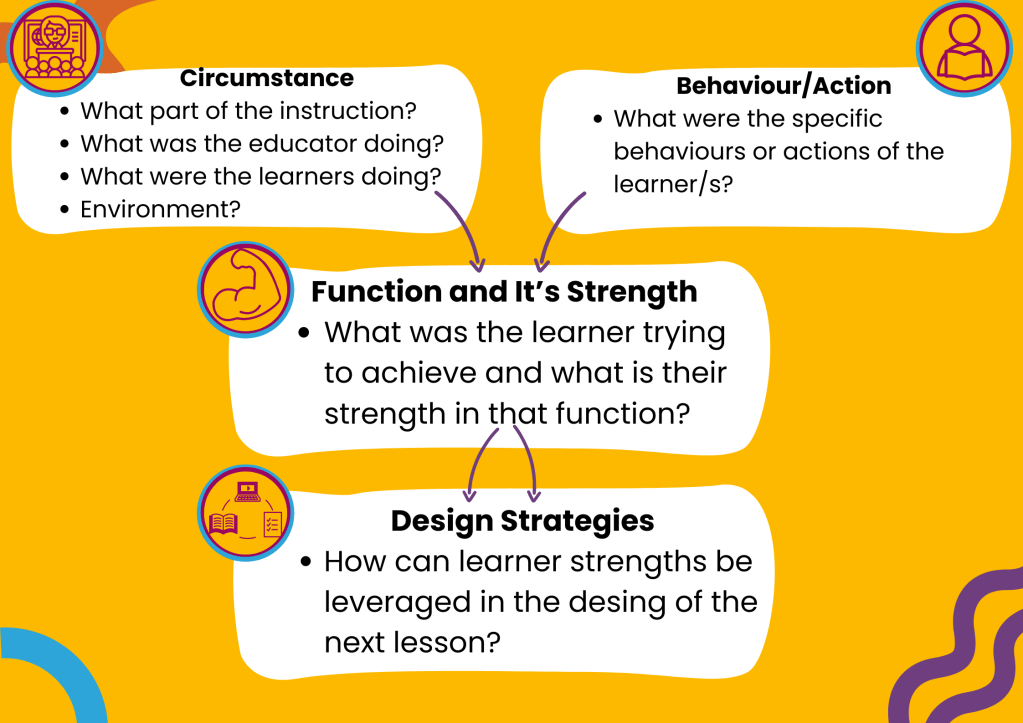
Shifting your mindset is a follow on from the previous. It can be difficult when we are stressed or tired but shifting our mindset about learners and how they behave from taking it personally to considering how this behaviour is telling you something about them as learners can have a profound impact on your well-being and your instruction. By reflecting on the circumstances within the lesson, the behaviours of the learners and the function of the behaviours can give great insight into how you can design future learning experiences to leverage the strengths of those learners.
Simply Ask Your Learners
Asking your learners how they learn best can help give you insight into how your learners perceive themselves as well as what they perceive to be strengths for them. A learner who perceives the learning as something they can achieve will be more engaged and motivated in the learning.
Provide Choice
Of course once we understand our learners’ strengths, we can implement them in our lesson design. One way to ensure we engage all learners is to provide choice and options. Why not use learner strengths to design those options.
For example…
A learner whose strength is drawing could consider an option to draw a diagram of the concept. Another learner who needs to talk it out could complete a short video of their understanding.
When we acknowledge our learners for what they bring to our learning spaces all learners succeed. Try one of these strategies next time you are reflecting on or designing a learning experience and see your learners thrive.
Explore More?
Watch – 5 Moore Minutes
Read – UDL: The Universally Inclusive Adventure of Designing for Diversity
Until next time,
Happy educating,
Sam
 Many Ways Education
Leave a comment