
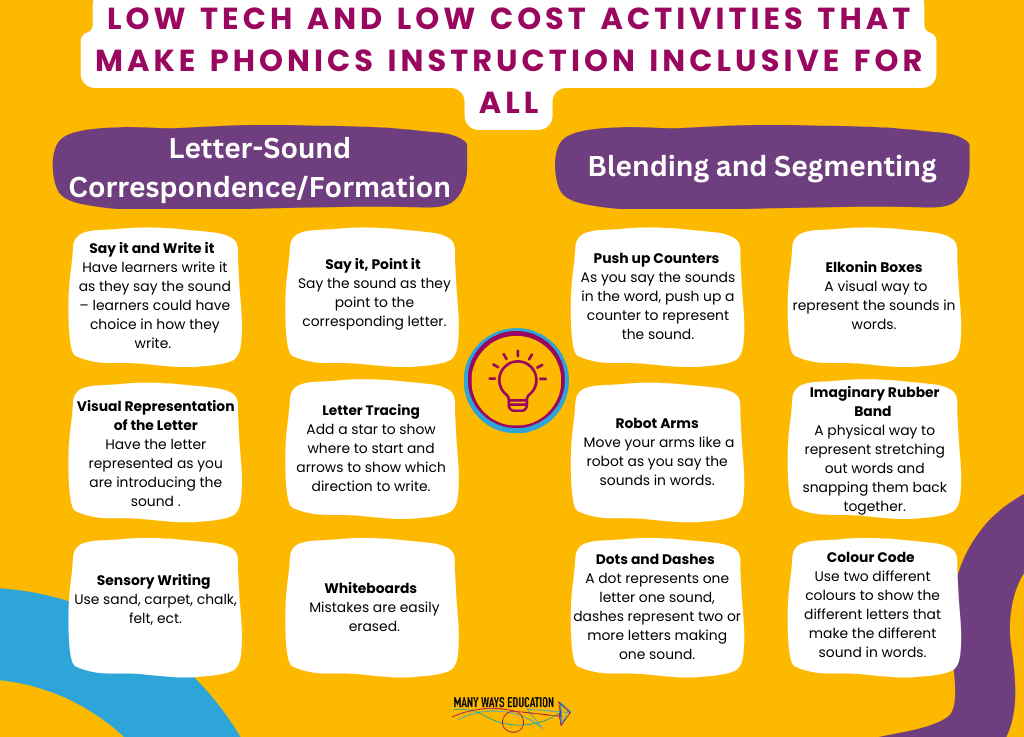
In this post, I want to share some practical activities that could be used in phonics instruction to provide choice for learners. The intent of these examples is to be low cost and simple activities to implement quickly.
Tag: UDL
In this post, I want to share some practical activities that could be used in phonics instruction to provide choice for learners. The intent of these examples is to be low cost and simple activities to implement quickly.

Once we have identified the goal of the lesson, derived from the standards, we need to identify how the goal is relevant to our learners. Relevance is identified in the UDL Guidelines under the Engagement Principle. Identifying the relevance of learning improves a learner's intrinsic motivation to learn the content (CAST, 2023). When learners understand how the goal of the lesson is relevant to their lives or goals, they are more likely to be engaged in that learning.

One of the great things about UDL is that there are so many great resources for educators to learn and explore UDL. The resources below have ensured that UDL is accessible for all educators.
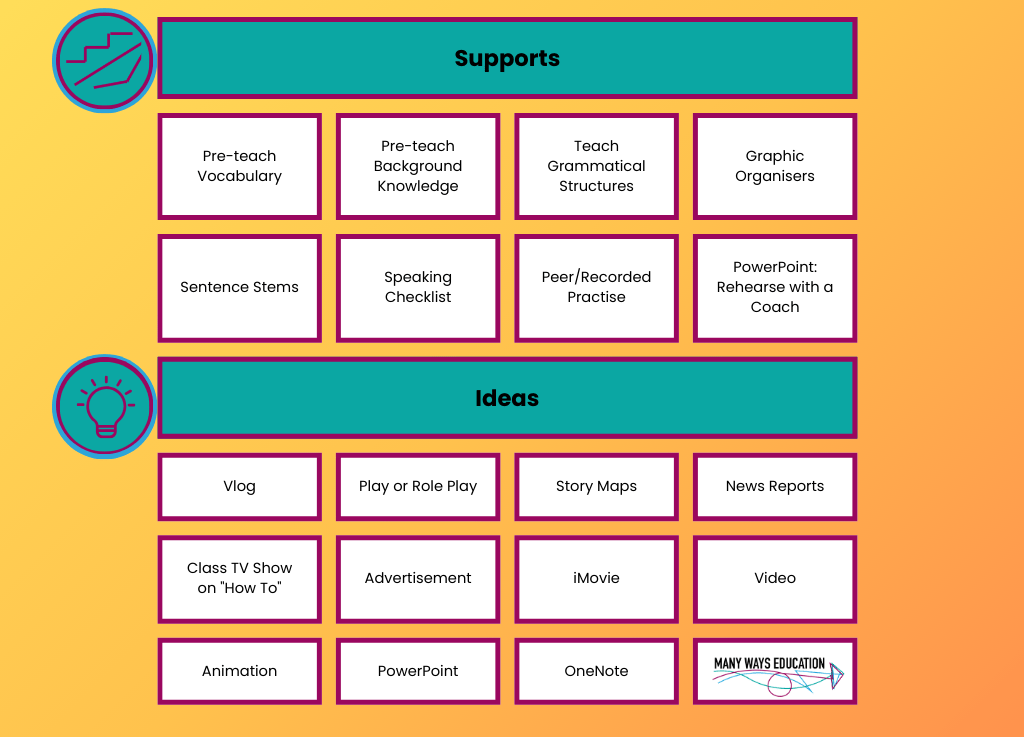
We can support the assessment of speaking standards two different ways depending on the type of standard. Depending on if the standard is a concept standard or a method standard, we can provide choice in the supports we provide to enable learners to achieve success or options in how they demonstrate their learning.

There are six key components of a learning goal that includes all learners. They include ensuring the goal is aligned to the standard, is clear, relevant, and meaningful to learners and is flexible in means. It also needs to challenge all learners. It may sound like a lot, but they are simple once you know what they are and how to do them. Read on for more.
There are many planning process examples out there so today I have identified the key elements of six examples that you might like to consider using when you are planning UDL lessons. Just like what we do with our students, I have provided you with a choice. To help you make a choice, I have identified the strengths of each example so you and/or your team have a clear understanding of which process might work for you in your context.

Students need to have a variety of explicit models and scaffolds to help them develop strategies to manage information and resources. They need to practice using these strategies and scaffolds to work out which ones work for them. These strategies are difficult to master because they are internalised strategies that are not always explicit to observe and learn from others. Most of us have developed strategies over time that work for us and so students need the opportunity to do the same.

Goals of this post: Understand what construct relevance is A process to ensure integrity while keeping flexible means when planning for assessment Key ideas: Always refer back to the standard when considering if a task will Terms you might need to know for this post: Achievement standard - what is assessed in the Australian curriculum … Continue reading How to Create Multiple Means in Assessment
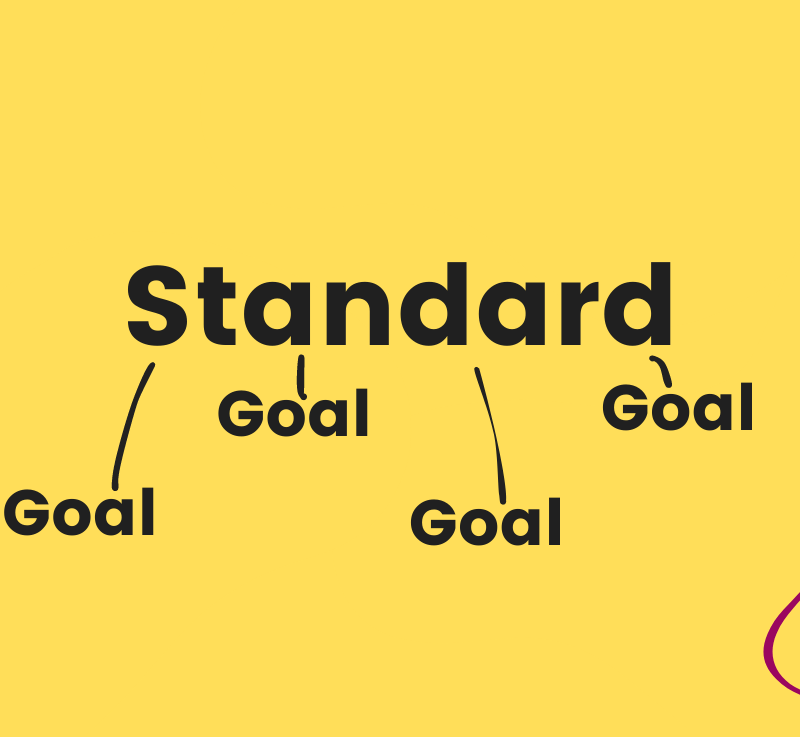
The goals of this post: Explain the difference between content and method standards Identify how to unwrap the standard to start to determine the goals of lessons Key ideas: There are two types of standards in the curriculum Unwrap the standard to identify the skills and concepts required Use other areas of the curriculum to … Continue reading How to Use Curriculum Standards to Create UDL Lesson Goals
The goal of this post: Explain why flexibility and choice created by multiple means is important in your classroom Key ideas: By providing multiple means you are catering for diversity in learners, developing expert learners, being more present in lessons and allowing students to achieve success Introduction If you are an UDL fan like me, … Continue reading Four BIG Reasons Why You Should Use Multiple Means in Your Lessons
 Many Ways Education